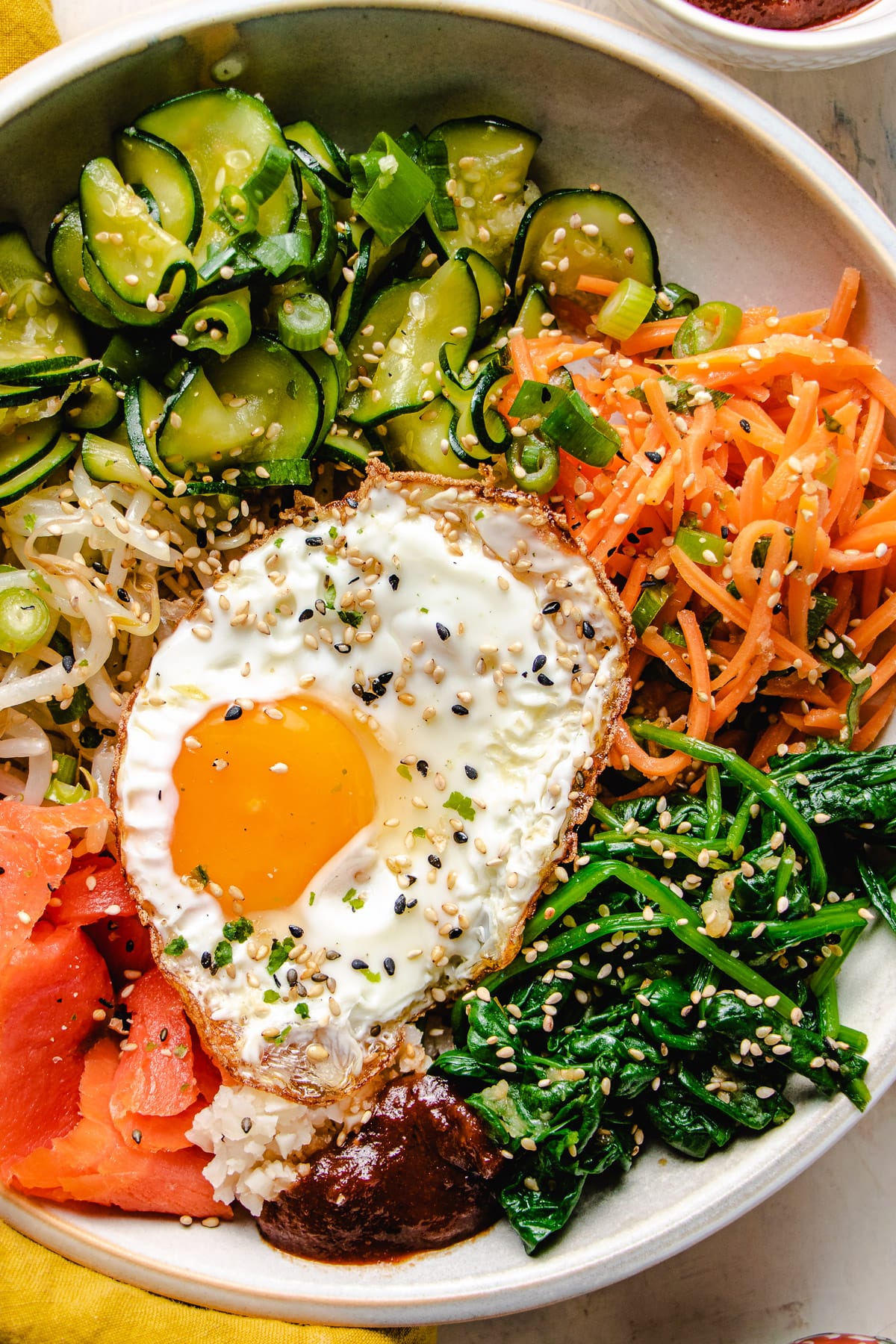
Vegetarian bibimbap –Vegetarian Bibimbap is a delightful and vibrant Korean rice bowl that brings together an array of flavors and textures, making it a perfect dish for anyone looking to enjoy a healthy and nourishing meal. This recipe not only satisfies your taste buds but also adds a beautiful array of colors to your dining table. Below, you’ll find a detailed guide to preparing this exquisite dish.
Vegetarian Bibimbap
This classic Korean dish features a base of rice topped with an assortment of sautéed vegetables, a fried egg, and a delicious gochujang sauce. It’s versatile and can be customized with your favorite vegetables.
Ingredients:
- 2 cups cooked jasmine or brown rice
- 1 cup sliced carrots
- 1 cup zucchini, julienned
- 1 cup spinach, blanched
- 1 cup mushrooms, sliced (shiitake or any of your choice)
- 1 medium cucumber, julienned
- 2 tablespoons soy sauce
- 2 tablespoons sesame oil
- 1 tablespoon vegetable oil
- 2 eggs (fried or poached as preferred)
- 1 tablespoon gochujang (Korean chili paste)
- 1 teaspoon sesame seeds (for garnish)
- Salt and pepper to taste
Instructions:
- Begin by preparing the rice according to package instructions. Once cooked, set aside.
- In a pan over medium heat, add vegetable oil. Sauté the sliced carrots for about 2-3 minutes until tender. Season with a pinch of salt and set aside.
- In the same pan, add the zucchini and mushrooms, cooking for 3-4 minutes until softened; set aside.
- Blanch the spinach in boiling water for about a minute, then drain and rinse under cold water to stop the cooking process. Squeeze out excess water and set aside.
- In a separate pan, fry or poach the eggs to your liking.
- To assemble the bibimbap, place a serving of rice in a bowl. Arrange the sautéed carrots, zucchini, mushrooms, and blanched spinach on top of the rice. Add the julienned cucumber as a fresh element.
- Top the dish with the fried or poached egg. Drizzle sesame oil and soy sauce over the top, and add a dollop of gochujang based on your heat preference.
- Garnish with sesame seeds, serve immediately, and enjoy the delightful flavors of your homemade Vegetarian Bibimbap!
This beautiful and satisfying dish can be enjoyed as a main course or shared among friends. It is perfect for lunch or dinner and can be easily adapted for vegan preferences by omitting the egg. Experiment with different vegetables to suit your taste, and dive into a nutritious meal that celebrates the essence of Korean cuisine!